Perfectly Imperfect: The Booming Business of Teaching Britain's A-Listers to Look Like They Don't Care
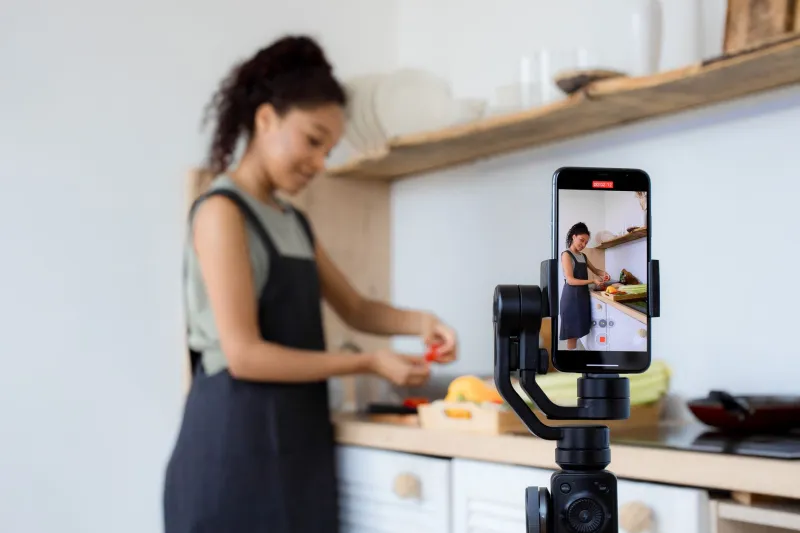
There is a particular type of TikTok video that has become the modern celebrity's most powerful weapon. You know the one. Hair scraped back, oversized hoodie, terrible lighting, a mug of tea that looks suspiciously like a prop. The celebrity in question sighs, glances sideways at the camera as though they've only just noticed it's there, and begins to speak in the halting, slightly breathless way of someone who is absolutely, definitely not reading from a script.
Spoiler: they almost certainly are.
Welcome to the authenticity economy — a booming, largely invisible corner of Britain's entertainment industry where highly paid consultants teach famous people how to seem like they're not famous people. It is, if you stop to think about it for more than three seconds, completely and gloriously deranged.
The Factory Behind the 'Unfiltered' Moment
The going rate for a top-tier influencer consultant in London currently sits somewhere between £3,000 and £8,000 per month, depending on how badly your client needs to convince the British public they buy their own milk. For that fee, you'll receive a tailored content strategy, platform-by-platform coaching, and — this is the bit that should make your eye twitch — lessons in what the industry calls 'authentic cadence.'
Authentic cadence, for those blissfully uninitiated, is the studied art of sounding unpolished. Hesitations placed in the right spots. The occasional 'um.' A laugh that sounds spontaneous because it has been practised forty times in front of a ring light. One former reality television producer, who asked not to be named but is currently charging a very well-known morning television presenter a frankly offensive monthly retainer, described it to us with almost no shame whatsoever.
"The biggest mistake celebrities make," she explained, "is being too smooth. The public has a finely tuned radar for polish now. So you have to build in the rough edges deliberately. It's like distressing furniture — you're making something new look worn in."
She used to work on a major ITV reality format. Now she works from a Soho office with a succulent on the desk and a waiting list.
The Kitchen Is the New Red Carpet
If there is a single location that has become the spiritual home of performed ordinariness, it is the celebrity kitchen. Not the actual kitchen, obviously — that one has a professional chef and a marble island the size of Rutland. No, we're talking about the content kitchen: a carefully curated, strategically cluttered space designed to communicate that this globally recognisable human being also burns their toast sometimes.
The cereal boxes are real brands, not luxury imports. The washing up is left artfully undone. There may, if the consultant is particularly good at their job, be a slightly wonky calendar on the wall from a local estate agent. The whole effect is immaculate in its approximation of mess.
One set designer who has worked on three separate celebrity 'home tour' videos told us the process takes the better part of a day. "You'd be amazed how much work goes into making a kitchen look like nobody's tried," she said. "We once spent four hours getting a fruit bowl to look casually full."
Four hours. On a fruit bowl. For a video captioned 'just a normal Tuesday tbh.'
Why It Works, and Why That's Our Problem
Here's the uncomfortable part: this whole elaborate charade functions because we, the audience, actively want to be fooled. The demand for 'real' celebrity content has never been higher, and the supply is entirely manufactured — a paradox so perfectly British it practically comes with a Bafta.
Social media platforms have rewarded rawness so consistently that the entertainment industry simply reverse-engineered it. If lo-fi gets more engagement than hi-fi, then lo-fi becomes the production standard. The algorithm wanted authenticity; the industry built a machine to produce it at scale.
Dr. Priya Mehta, a media studies lecturer at a Russell Group university who has been researching parasocial relationships for the better part of a decade, puts it bluntly: "Audiences have become extraordinarily sophisticated at detecting inauthenticity in traditional advertising. So the industry moved the inauthenticity somewhere audiences weren't looking yet. They're catching up, but slowly."
The Stars Who've Mastered the Art
Without naming names — because our lawyers enjoy their weekends — it's worth noting that several of Britain's most beloved 'down-to-earth' celebrities have teams of between three and seven people dedicated entirely to their social media presence. The person you believe is chaotically filming themselves making a Greggs order has, in many cases, a director, an editor, a content strategist, and someone whose specific job title is 'authenticity producer.'
Authenticity producer. A job title that, when you say it out loud, collapses in on itself like a dying star.
The irony, of course, is that genuine celebrities who are actually a bit rough around the edges — who genuinely do film themselves in bad lighting without a script — often get coaching to smooth those edges out for more formal appearances. So you have famous people being taught to seem real for the internet while simultaneously being taught to seem polished for television. The whole industry is one enormous hall of mirrors, and somewhere in the middle of it is a very tired publicist eating a Pret sandwich.
The Bottom Line
None of this is going away. If anything, as audiences grow more sceptical, the consultants will simply get better at their jobs, the rough edges will be more precisely calibrated, and the fruit bowls will be even more convincingly casual.
The authenticity industry is, in the end, just showbusiness with worse lighting. And the most authentically British thing about it? Everyone involved knows it's ridiculous, nobody's going to stop, and we're all going to keep watching anyway.
That mug of tea isn't even warm, by the way. It never was.