Needle Point: The Great British Celebrity Botox Denial That's Fooling Absolutely Nobody
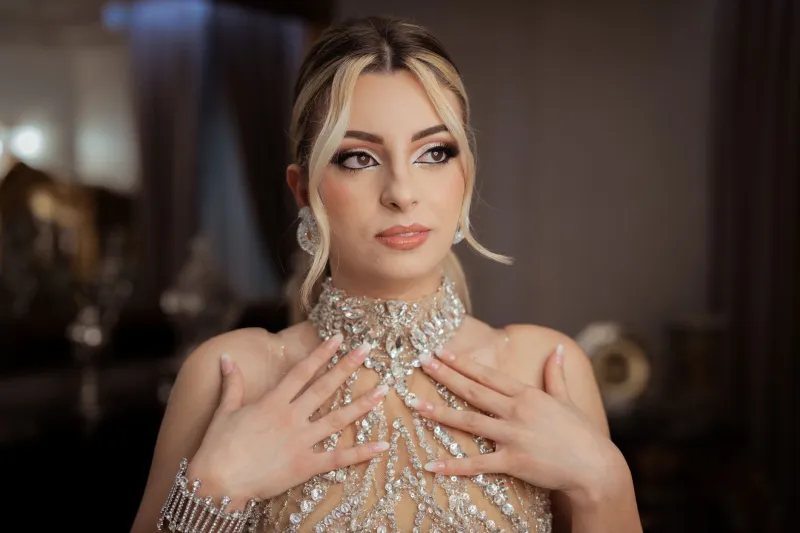
Let's play a game. Cast your mind back to a recent red carpet event. Perhaps a BAFTA, a National Television Awards do, or even a Saturday night TV comeback. You clock a familiar face — someone you've watched on your telly for twenty-odd years — and something is different. The forehead hasn't moved. The lips appear to have absorbed a small throw cushion. The cheekbones have developed architectural ambitions. And yet, when a journalist dares to ask, the response is reliably identical: "I've just been drinking more water, honestly."
Britain, we need to talk about the cosmetic surgery cover-up that has quietly become one of entertainment's most elaborate and least convincing performances.
The PR Playbook Nobody Will Admit Exists
Here's what nobody in the industry will say on the record, but absolutely everyone acknowledges off it: there is an unspoken agreement operating at the highest levels of British celebrity management that cosmetic procedures are simply not discussed. Not denied outright — that would be too obvious — but deflected, reframed, and buried under an avalanche of wellness content.
The formula is remarkably consistent. Step one: the procedure happens. Step two: a new gym regime is announced on Instagram. Step three: a collagen supplement brand partnership materialises within weeks. Step four: any direct question is met with a beatific smile and a reference to "self-care" and "finally putting myself first."
It's a masterclass in misdirection, and the British public — bless our eternally polite hearts — has largely played along. Until now.
"The audience has got significantly sharper," says one veteran entertainment journalist who asked not to be named for obvious professional reasons. "People who follow these celebrities obsessively have years of reference photos. They notice. And social media means that noticing is now a collective, very public sport."
The Impossible Standard Hidden in Plain Sight
What makes this particular deception genuinely damaging — rather than merely annoying — is what it communicates to the millions of ordinary people watching at home. When a 45-year-old television presenter appears on screen looking 29 and attributes it entirely to "good genes and a positive mindset," the message received by a woman in Wolverhampton who actually looks 45 is quietly devastating.
You are failing at ageing. You are not trying hard enough. You are simply not doing the work.
Except the work, in many cases, costs upwards of £15,000 a year and requires access to a discreet Harley Street clinic that doesn't appear on any public-facing booking platform.
Dermatologist and aesthetics practitioner Dr. Priya Menon, who works with a number of high-profile clients in London, is careful with her words but clear in her meaning. "When public figures don't acknowledge what's achievable through medical aesthetics versus what's achievable through lifestyle alone, it creates completely unrealistic benchmarks. Patients come to me frustrated that their skincare routine isn't delivering results that only procedures can achieve. The confusion is real and it has consequences."
Those consequences include a sharp rise in younger women seeking procedures earlier, often driven by the belief that the celebrities they admire have simply found the right serum.
The Brave, Brilliant Exceptions
Which is precisely why the rare celebrities who choose honesty deserve considerably more credit than they typically receive.
When Denise Welch discussed her own procedures openly on Loose Women, the response from the public was overwhelming and almost entirely positive. When Katie Price — whatever one's feelings about her broader public persona — has spoken candidly about her surgical history, she has at least removed the fiction. When various Love Island alumni have listed their procedures with the cheerful transparency of a shopping receipt, young viewers have at least had access to accurate information.
The pattern is revealing: the celebrities who tend toward honesty are those with less to lose from the beauty establishment's approval. The bigger the mainstream career, the more carefully the secret is guarded.
"There's a genuine fear," explains one talent manager, speaking anonymously. "Admitting to procedures invites scrutiny of all your procedures. It opens a door you can't close. And for certain types of presenting careers — particularly anything aimed at a broad family audience — there's a perception that it damages the relatability factor."
The Social Media Reckoning
What the old guard of British celebrity management hasn't fully reckoned with is that social media has functionally destroyed their ability to control this narrative. TikTok's "before and after" culture is merciless. Dedicated accounts exist solely to archive transformation timelines. Fan communities on Reddit construct detailed photographic comparisons that would make a forensic analyst proud.
The result is a peculiar inversion: celebrities who stay silent are increasingly more discussed for their procedures than those who simply acknowledge them. The cover-up has become more interesting than the thing being covered up.
And the younger generation of celebrities seems to understand this instinctively. Many influencer-turned-mainstream stars treat their aesthetic adjustments with the same casual transparency they apply to everything else — posting about lip filler appointments the way their predecessors might have posted about a new haircut. The sky has not fallen. Their careers have not collapsed. Their audiences, largely, have shrugged and moved on.
The Industry at a Crossroads
Something is shifting, however slowly. A handful of mainstream broadcasters have quietly begun encouraging their on-screen talent toward greater openness, recognising that the old pretence is increasingly untenable and, frankly, a bit embarrassing for everyone involved.
But the deeper structural problem remains. As long as the beauty and wellness industries profit from the gap between what's achievable naturally and what requires medical intervention — and as long as celebrity endorsements of the former fund the latter — the incentive to maintain the fiction is enormous.
In the meantime, the British public will continue doing what it does best: raising an eyebrow (or attempting to, depending on recent appointments), tutting quietly, and waiting for someone with sufficient nerve to finally say the quiet part loud.
The water-drinking explanation isn't cutting it anymore, darlings. It never really did.