The People You Never See: Inside the Shadow Industry Scripting Britain's Biggest Celebrity Moments
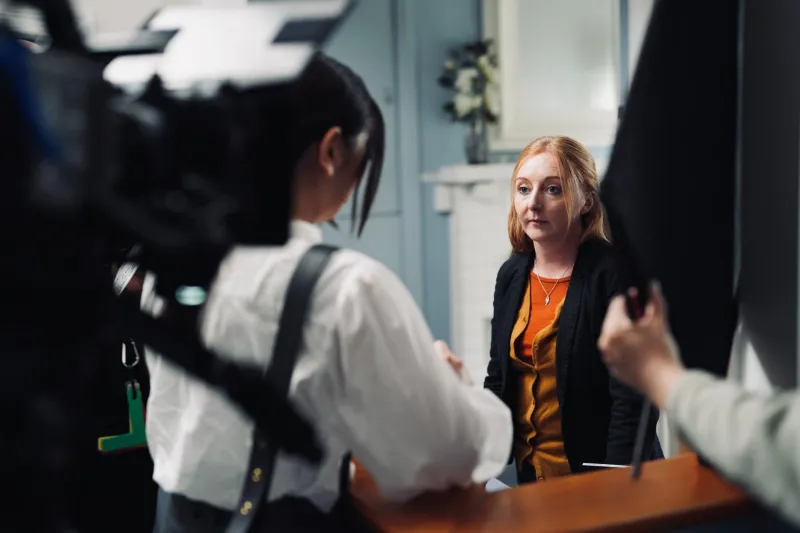
The celebrity is sitting in a softly lit studio, voice cracking at precisely the right moment, telling the nation something deeply personal about their mental health journey. The interviewer leans forward with practised empathy. The clip will be watched four million times by morning. Twitter will declare it "so brave." A redemption arc will be officially born.
What the camera doesn't show — what it's specifically designed not to show — is the six weeks of preparation that preceded this moment. The crisis manager who identified the optimal timing. The media lawyer who reviewed every sentence for legal exposure. The therapist who helped the celebrity process their story, yes, but also helped them understand which parts of that story would land best with a British audience in the current news cycle. The PR strategist who chose this particular interviewer because of their track record of sympathetic coverage. The digital team on standby to amplify the clip the moment it airs.
This is the shadow industry. And it is, by any measure, one of the most sophisticated and least discussed forces in British entertainment.
The Architecture of Authenticity
The great irony of modern celebrity management is that its primary product is the appearance of having no management at all. The entire apparatus exists to make you believe you're seeing the real person — unfiltered, vulnerable, genuine. The more invisible the machinery, the more effective it is.
"The goal is always zero fingerprints," explains one crisis communications consultant — speaking anonymously, naturally — who has worked with several prominent British television personalities over the past decade. "If the public can see the strategy, the strategy has failed. Our job is to make the calculated look accidental."
This is not a new industry, but it has become dramatically more complex and more professionalised in the social media era. Where once a publicist and an agent might have sufficed, the modern British celebrity of any significant profile now typically operates with a team that can include: a traditional PR firm, a separate digital/social media strategist, a crisis communications specialist (often a lawyer with PR experience), a personal therapist who may or may not be involved in media strategy, a financial manager, and occasionally a dedicated "reputation consultant" whose entire brief is long-term public perception.
The Therapist Question
Perhaps the most ethically nuanced figure in this ecosystem is the celebrity therapist — a professional operating at the intersection of genuine mental health support and, in some cases, narrative management.
To be clear: the vast majority of therapists working with high-profile clients maintain rigorous ethical boundaries. Their work is confidential, client-centred, and has nothing to do with media strategy. But the industry has also produced a smaller, murkier subspecies — practitioners who have, over time, become almost hybrid figures, their therapeutic insight deployed as much for public positioning as for private healing.
"There are people who operate in a grey area," admits one entertainment industry lawyer, who has worked alongside various members of celebrity management teams. "They're not doing anything technically wrong. But they understand that their client's story has commercial value, and they help shape how it gets told. Whether that's therapy or brand management with a BACP certificate is a question worth asking."
The proliferation of celebrity mental health content — the candid interviews, the Instagram posts about therapy, the podcast episodes about anxiety — has made this grey area considerably more profitable. Mental health disclosure, handled correctly, is now one of the most powerful tools in the celebrity reputation arsenal. It generates sympathy, deflects scrutiny, and positions the subject as self-aware and growth-oriented. It is also, when deployed strategically, a masterclass in controlled vulnerability.
Crisis Management: The Art of the Controlled Burn
When a scandal breaks — and in British celebrity culture, they break with magnificent regularity — the first call is rarely to a friend or family member. It's to a crisis manager, and the conversation that follows is less emotional support and more tactical triage.
The question isn't "are you okay?" It's "what do we know, what might they know, and what's the best possible version of this story?"
Britain has developed a particularly sophisticated crisis management culture, partly because our tabloid press has historically been so aggressive that celebrities required equally aggressive defensive infrastructure. The phone-hacking era, for all its horror, produced a generation of lawyers and communications specialists with an almost forensic understanding of how British media operates and how narratives can be shaped, redirected, or — when necessary — simply waited out.
"Timing is everything," says one source who has managed several high-profile British celebrity crises. "A story that breaks on a Friday afternoon before a bank holiday weekend has a completely different life cycle to one that breaks on a Tuesday morning. We know that. We use that. Sometimes the best strategy is simply to ensure the conversation happens when the news cycle is least hungry."
The Comeback: Britain's Most Carefully Engineered Product
If crisis management is the defensive arm of the shadow industry, the celebrity comeback is its greatest creative achievement. And Britain, with its particular appetite for redemption narratives — we love building people up, destroying them, and then forgiving them on a roughly five-year rotation — is the world's most fertile market for them.
A well-engineered British celebrity comeback typically follows a recognisable but highly effective structure: a period of public absence ("taking time for themselves"), followed by a carefully chosen re-entry point (a charity association, a low-stakes television appearance, a candid interview with a sympathetic outlet), followed by a gradual rehabilitation of the public image through a series of increasingly positive touchpoints.
Each of these stages is planned. The charity isn't random — it's selected because it aligns with a specific public perception gap. The interview isn't spontaneous — it's been negotiated for weeks, with agreed parameters about what's in and out of bounds. The "candid" social media post about personal growth has been reviewed by at least three people before it goes live.
"People want to believe in genuine transformation," says our communications consultant. "Our job is to give them something real enough to believe in. The transformation might be real — often it is. But the presentation of that transformation is always, always managed."
The Price of the Invisible
All of this costs money — significant money. Crisis management retainers, specialist legal advice, therapy, digital strategy: the full infrastructure of a professionally managed British celebrity can run to tens of thousands of pounds per month. This creates an immediate and uncomfortable inequality: the celebrities who most need sophisticated reputation management — those whose public image is most fragile, whose scandals are most damaging — are often not the ones who can afford it.
The result is a two-tier system in which the wealthy and well-connected navigate crises with expert support and emerge relatively intact, while less established figures face the same media machinery without the tools to manage it. The outcomes, predictably, are very different.
Next time you watch a celebrity interview and find yourself thinking, "wow, they seem so genuine" — they might well be. But somewhere off-camera, someone spent considerable time and money making sure you'd think exactly that.