Waterworks on Demand: The Cold, Calculated Science Behind Your Favourite Talent Show Sob Stories
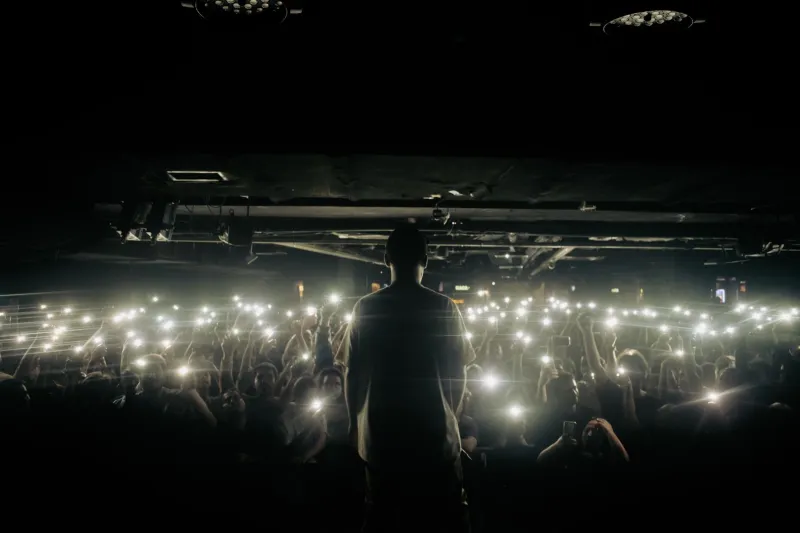
Let's be honest. You've been there. Saturday evening, sofa, possibly a glass of something chilled, and suddenly there's a nervous-looking forty-seven-year-old from Wolverhampton standing on a stage the size of a football pitch telling Ant and Dec he's "never really had the confidence" before absolutely belting out an operatic aria that makes Simon Cowell's jaw drop like a broken drawbridge. You cry. Your mum cries. The dog looks confused. Britain weeps collectively into its Kettle Chips.
 Photo: Simon Cowell, via www.nbc.com
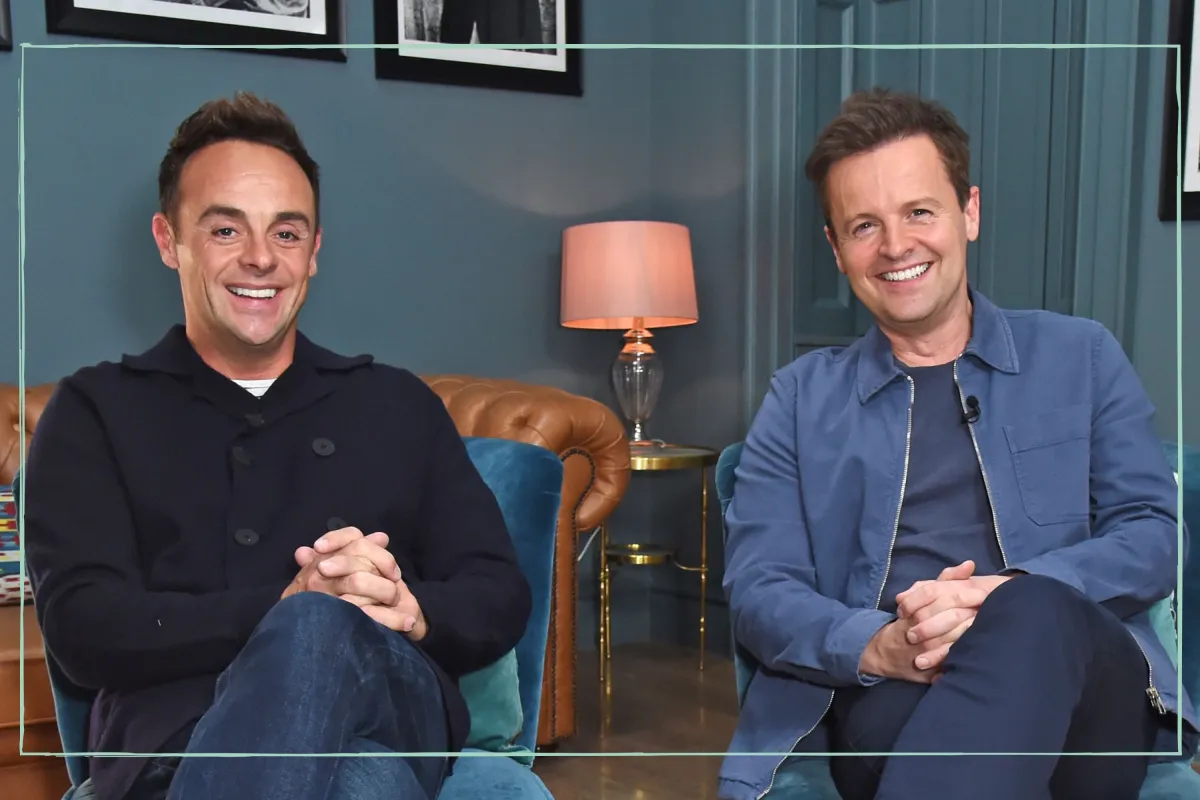 Photo: Ant and Dec, via cdn.mos.cms.futurecdn.net
But here's the thing nobody's asking while they're frantically searching for a tissue: was any of that actually spontaneous?
The Backstory Machine
Former Britain's Got Talent contestant Darren Mills (not his real name — he's still under NDA, which tells you everything) auditioned back in 2019 and describes the pre-show process as "basically an emotional audition before the actual audition."
"They interview you for hours," he told Go Gossip UK. "Producers are fishing. They want the dead nan, the redundancy, the childhood illness, the divorce. If your life's been perfectly pleasant, they sort of lose interest in you. I mentioned offhand that my dad never came to my school plays and the researcher's eyes absolutely lit up. That became my entire story."
What viewers see as a spontaneous revelation — the moment a contestant chokes up explaining their journey — is frequently the product of weeks of pre-production archaeology, in which a team of researchers excavates a person's emotional history with the enthusiasm of a Time Team dig, looking for the specific trauma that will resonate most with a Saturday night ITV audience.
This isn't accidental. It's architecture.
The Camera Knows Before You Do
Watch any golden buzzer moment back and notice something peculiar: the reaction cutaways are perfect. The tearful grandmother in row seven. The child with wide, glistening eyes. The judge pressing fingers to lips in barely-contained emotion. These shots don't happen by accident in a venue full of thousands of people.
"There are camera operators specifically briefed to find certain faces in the crowd," explains one former floor manager who worked on a major talent competition for three series. "Before the act even starts performing, if producers know it's going to be a big emotional moment, there's a spotter in the audience identifying the right people — someone elderly, someone young, someone who looks like they're already a bit fragile. When the music swells, those cameras are already pointing at exactly the right faces."
The editing suite then does the rest. A reaction shot filmed during a completely different act can be — and frequently is — dropped into another performance's edit to maximise emotional impact. Technically legal. Morally? Well.
The Golden Buzzer Industrial Complex
Nothing has weaponised audience emotion quite like the golden buzzer, that beautiful, theatrical piece of stagecraft introduced to give judges the power to send an act straight to the live shows. On screen it looks like a spontaneous eruption of joy. Off screen, according to multiple sources, it is frequently anything but.
"There are conversations," says our production insider, choosing words carefully. "Not always explicit ones, but there's a general understanding of which acts are going to receive that moment and roughly when. A judge doesn't just spontaneously leap up and slam a button in front of ten million viewers without some awareness of what's coming."
This isn't to say the talent itself is fake — many golden buzzer recipients are genuinely extraordinary performers. But the moment? The orchestrated gasp, the cascading gold confetti, the tearful embrace? That's a set piece as carefully choreographed as a West End musical.
Contestants Fighting Back
Interestingly, some former participants have become increasingly vocal about the emotional toll of the process. Several have spoken publicly about being encouraged to discuss grief and trauma in pre-show interviews, only to feel exposed and vulnerable when those conversations were edited into broadcast packages without their full context.
"I talked about losing my brother for about forty minutes," one former semi-finalist told a podcast last year. "They used thirty seconds of it, taken completely out of context, immediately before my performance. I hadn't prepared myself to be in that headspace when I walked out. I was already crying before I'd sung a note. And I think that was entirely the point."
The psychological mechanics are worth unpacking. A contestant who walks on stage already emotionally raw performs differently — more vulnerably, more nakedly — than one who's composed and professional. Vulnerability reads as authenticity on television. Authenticity generates emotional investment. Emotional investment generates votes, social media shares, and crucially, the kind of viral moments that keep the franchise commercially dominant year after year.
Are We Mugs?
Here's where it gets philosophically thorny. Does it actually matter if the emotion is engineered, if the feeling it produces in the viewer is real? Plenty of people would argue that a well-constructed narrative — even a manipulated one — is simply good storytelling. Cinema does it. Theatre does it. Why should television be different?
The counter-argument is one of consent and exploitation. Real people, often from non-media backgrounds, are having their most painful personal experiences processed and packaged as entertainment product without necessarily understanding the full mechanics of what's being done with their stories.
What's undeniable is that Britain's Got Talent and its siblings have turned the emotional audition into a format so perfected it's essentially a genre unto itself. The trembling entrance. The dismissive initial reaction from the panel. The surprising first note. The dawning realisation. The standing ovation. The tears. It's as reliable a three-act structure as anything Shakespeare knocked out.
The Audience Knows, and Doesn't Care
Perhaps the most revealing thing about this entire enterprise is that British audiences are increasingly aware of the manipulation — and largely continue watching anyway. Social media is awash with people simultaneously mocking the obvious emotional engineering and admitting they cried anyway. We're in on the joke and falling for it simultaneously.
Which is, when you think about it, the most impressive production achievement of all. They've made us complicit in our own manipulation, and we're absolutely fine with it.
Pass the tissues. There's a dog act on next and apparently its owner is going through a difficult time.