Ghost in the Machine: How ABBA's Digital Comeback Unleashed Britain's Hologram Concert Obsession
Ghost in the Machine: How ABBA's Digital Comeback Unleashed Britain's Hologram Concert Obsession
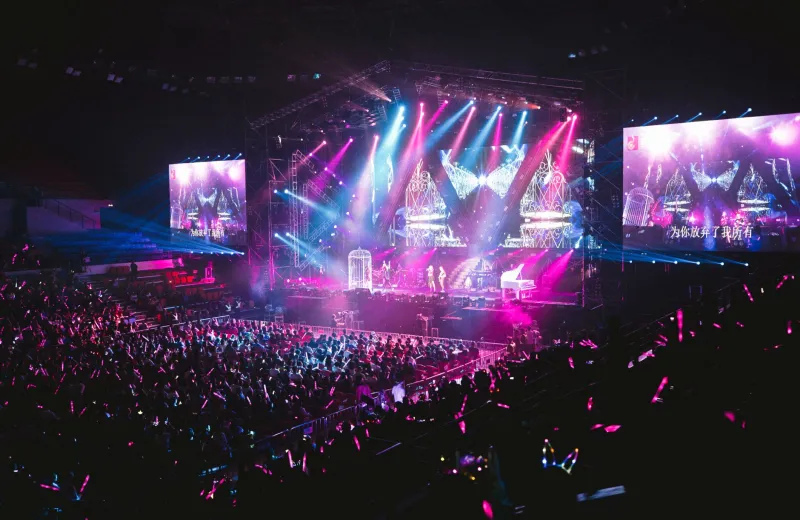
Let's be honest. When ABBA announced they were returning to stages — sort of, technically, in a manner of speaking — most of us assumed it was a clever marketing gimmick that would last about six months before quietly folding like a damp Swedish crispbread. Instead, the ABBA Arena in Stratford has become one of the most visited entertainment venues in the country, shifting millions of tickets and making grown adults weep openly at pixels dancing in spandex. And now, rather predictably, the rest of the entertainment industry has collectively lost its mind trying to replicate the formula.
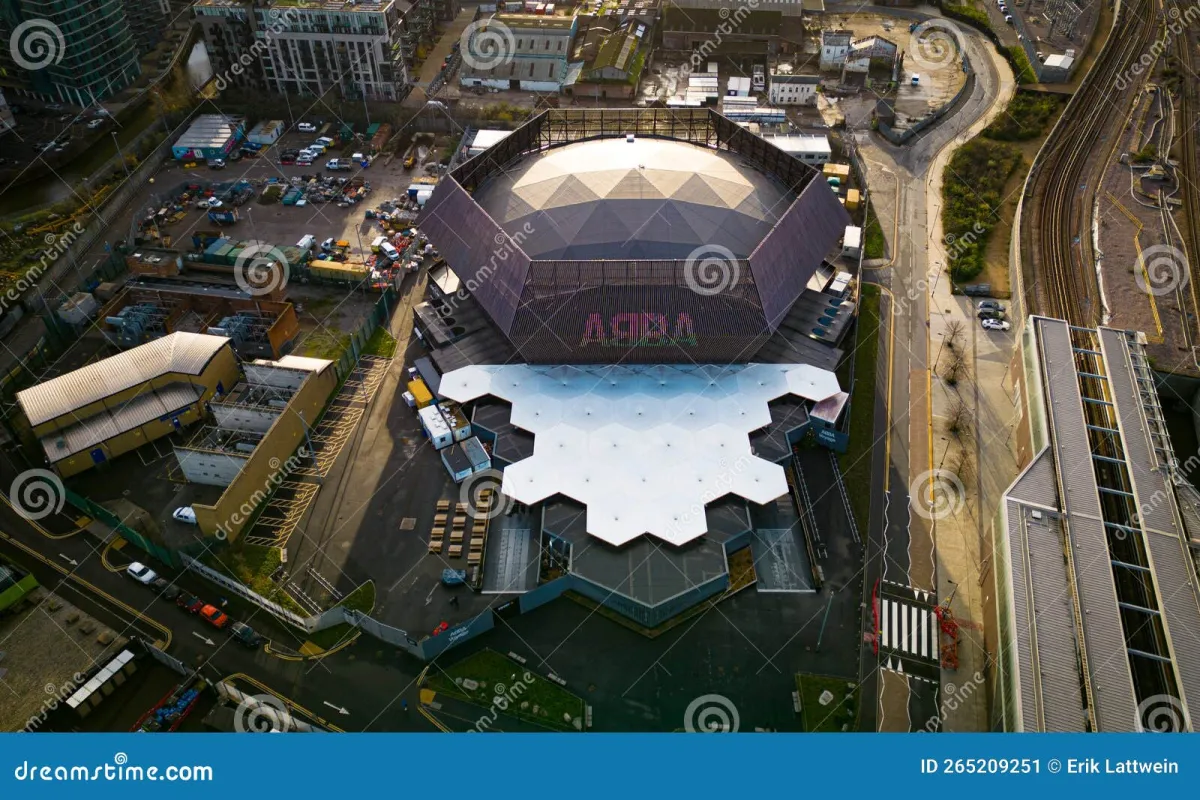 Photo: ABBA Arena, via thumbs.dreamstime.com
Welcome to Britain's hologram revolution. Population: increasingly, everyone who ever sold a record.
The Swedes Who Accidentally Changed Everything
ABBA Voyage — the technically dazzling spectacle that launched in 2022 and has shown absolutely zero signs of stopping — wasn't just a concert. It was a proof of concept. Industrial Light & Magic, the visual effects company that brought you Luke Skywalker and a galaxy far, far away, spent years motion-capturing the four original members at ages they haven't actually been since Margaret Thatcher was in Downing Street. The result is a 90-minute show where digital avatars dubbed 'ABBAtars' perform in front of a live band to a crowd that is, by all accounts, completely and utterly unhinged with joy.
The numbers are staggering. Ticket demand has remained ferocious long after most concert tours would have packed up the pyrotechnics. The arena itself was purpose-built specifically for this show — a £140 million investment that, in retrospect, looks like the shrewdest gamble in British entertainment since Simon Cowell decided to put a telephone number on screen and ask the nation to vote.
What ABBA demonstrated, almost accidentally, was that British audiences don't merely tolerate the idea of watching a digital recreation of their favourite artists. They absolutely devour it.
The Queue of Ghosts Waiting in the Wings
The moment those ticket receipts started rolling in, the phones in every entertainment lawyer's office in London began ringing off the hook. Because if you can do it with ABBA — four living, breathing, consenting legends who signed off on every pixel — the obvious next question is monumentally complicated: can you do it with artists who are no longer here to sign anything?
The names being whispered in industry corridors are the ones you'd expect. Amy Winehouse, whose estate has already been approached multiple times by technology firms dangling eye-watering sums. The Beatles — specifically, a fully digital Fab Four reunion that would theoretically require navigating the competing interests of Paul McCartney, Ringo Starr, the Lennon estate, and the Harrison estate simultaneously, which sounds less like a concert and more like a particularly brutal episode of Dragons' Den. Freddie Mercury. David Bowie. The list grows longer every time someone checks the streaming charts.
Licensing fees for posthumous digital performances are, by all industry accounts, absolutely astronomical. We're talking sums that make traditional touring deals look like busking money. Estates are understandably cautious — and occasionally suspicious — about who gets to control how their loved one is represented, what songs they perform, and crucially, whether the whole thing looks less like a tribute and more like a mildly unsettling Black Mirror episode.
The Ethical Minefield Nobody Wants to Map
Here's where it gets genuinely thorny, and Go Gossip UK isn't going to pretend otherwise.
ABBA Voyage sidesteps the most uncomfortable questions because the artists themselves participated enthusiastically. They gave consent. They sat in the motion-capture suits. They approved the final product. When Agnetha and Björn and Benny and Anni-Frid signed off, there was no ethical ambiguity — just four people making a very sensible business decision about their legacy.
Posthumous performances are an entirely different matter. Critics — and there are many — argue that digitally recreating a dead artist and charging the public to watch them 'perform' crosses a line that no amount of estate approval can fully legitimise. The artist cannot consent. They cannot object. They cannot decide, in the moment, that actually they'd rather not have their likeness shimmying across a stage in 2027 while someone sells overpriced lager in the foyer.
Proponents counter that estates have always managed legacies — posthumous albums, greatest hits compilations, biographical films — and that hologram concerts are simply the logical evolution of that tradition. Both sides have a point. Neither side is entirely comfortable.
The Musicians' Union has already called for industry-wide guidelines. Several prominent artists have updated their wills specifically to prohibit posthumous digital performances. Others, reportedly, have done the opposite — quietly including clauses that permit them, presumably on the basis that future royalties are future royalties regardless of which dimension you're currently inhabiting.
Britain's Tech Firms Smell Blood in the Water
While the ethical debate rages, Britain's technology sector has spotted an opportunity the size of a stadium. A clutch of UK-based firms — some spinning out of university research departments, others funded by entertainment industry venture capital — are now developing hologram and volumetric capture technology specifically aimed at the live events market.
The ambition isn't just to replicate ABBA Voyage. It's to make the technology scalable, affordable, and deployable in venues that aren't custom-built East London arenas. Imagine a touring hologram show that could rock up at the O2 one week and the Manchester Arena the next. The infrastructure challenges are immense, but the commercial prize is enormous enough that several very serious people with very serious investment portfolios are betting heavily on solving them.
Britain, somewhat unexpectedly, is positioning itself as a global leader in this space. The combination of world-class visual effects expertise (Pinewood, Shepperton, and their various satellite operations), a music industry infrastructure that remains among the most sophisticated on earth, and an audience that has demonstrably proven its appetite for this kind of experience makes the UK a uniquely fertile testing ground.
The Audience That Made It All Possible
Perhaps the most underreported element of the entire hologram revolution is the simplest one: British audiences actually turned up. In vast numbers. Repeatedly. With enormous enthusiasm.
There's something rather touching about that, if you squint at it from the right angle. A nation that spent decades buying CDs, downloading illegally, then streaming for pennies, suddenly willing to pay premium ticket prices — often exceeding £100 — to watch a digital representation of artists they love. It suggests, rather movingly, that the live experience still means something. That communal joy in a darkened arena, surrounded by strangers who share your exact taste in Swedish pop, is worth paying for regardless of whether the performers are technically made of light.
ABBA didn't just start a technology revolution. They reminded Britain why it fell in love with live music in the first place.
Whether the ghosts that follow them can do the same remains, for now, an open question. But given the money involved, you can be absolutely certain someone is going to find out.