Cancelled With Prejudice: How Streaming Giants Are Leaving Britain's Most Loyal Viewers Out in the Cold
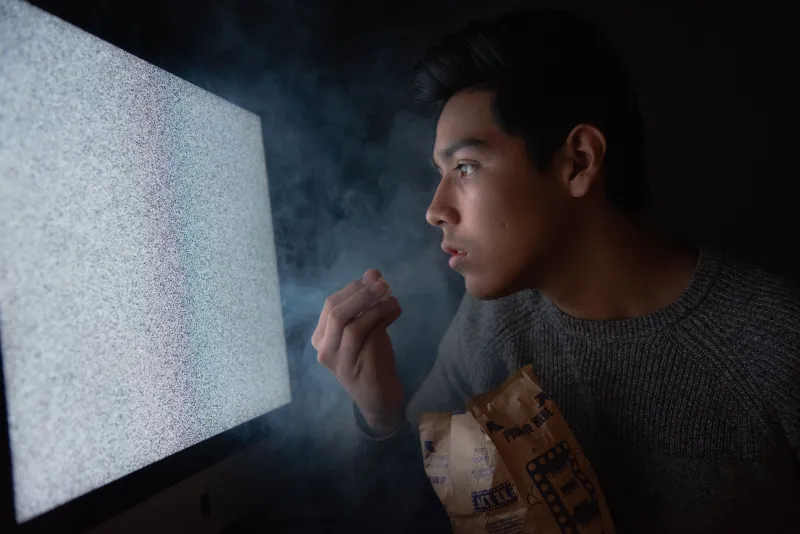
You know the feeling. You've spent eighteen months emotionally investing in a show — learning the lore, tracking the character arcs, arguing passionately in Facebook groups at midnight — and then, with all the warmth of a council tax reminder, a press release lands confirming it's over. No finale. No closure. Just a corporate shrug dressed up in PR-speak about "difficult decisions" and "content strategy."
Welcome to the loyalty trap. And right now, British telly fans are falling into it at an absolutely spectacular rate.
The Numbers Behind the Heartbreak
Between 2021 and 2024, Netflix alone cancelled over 60 original series globally after just one or two seasons — several of them with significant UK fanbases. Amazon Prime Video, Paramount+ and Apple TV+ have all followed suit with their own particular brand of brutal efficiency. The pattern is depressingly consistent: commission a buzzy show, harvest the subscriber sign-ups from curious viewers, and then quietly pull the plug the moment the algorithm decides the numbers don't justify a renewal.
What the algorithm doesn't measure — and frankly doesn't care about — is the three-season emotional arc you were promised. Or the cliffhanger ending that now lives in permanent narrative limbo. Or the fact that you introduced the show to your mum, your colleagues, and your dentist.
Britain has always had a particularly intense relationship with serialised television. We're a nation that still discusses the EastEnders Christmas episode in January and treats Coronation Street storylines like local news. We don't watch television passively — we adopt it. Which makes the streaming cancellation model not just commercially cynical, but genuinely culturally destructive.
The Fans Left Behind
Take the devoted following of Inside No. 9 — not a cancellation victim, thankfully, but a show whose eventual conclusion prompted genuine national mourning. Or consider the chaos when Minx, a show with a passionate UK following, was axed by HBO Max and then briefly revived elsewhere, leaving fans perpetually uncertain whether their investment was safe.
Sarah, 34, a teacher from Leeds and self-described "obsessive" of several cancelled streaming dramas, describes the experience as uniquely modern grief. "It's not like a book ending badly — at least the book ends," she says. "With a cancelled show, you're just left mid-sentence. I spent two years watching one series, theorising about where it was going, and then it was gone. There was nowhere to put all that investment."
Psychologists who study parasocial relationships — the emotional bonds viewers form with fictional characters and the worlds they inhabit — have begun flagging this as a genuine wellbeing issue. Dr. Marcus Webb, a media psychologist based in Bristol, notes that "narrative incompletion" creates a specific type of cognitive discomfort. "Human brains are wired to seek resolution," he explains. "When a story is forcibly left unfinished, particularly one a viewer has followed intensely, the psychological response can mirror the frustration of real-life unresolved conflicts. It's not trivial."
The Algorithm Doesn't Know Your Name
Here's the truly maddening part: the decision to cancel your favourite show almost certainly had nothing to do with its quality, its cultural impact, or the size of its fanbase. It had to do with completion rates, watch time metrics, and whether enough new subscribers cited the show as their reason for signing up during a given quarter.
Streaming executives have been remarkably candid about this in industry interviews, even if they'd never say it to your face. A show can have a small but ferociously loyal audience — exactly the kind of devoted viewership that sustains traditional broadcasting — and still get axed because it's not pulling in enough new eyeballs to justify its production cost.
This is the fundamental incompatibility between the streaming business model and the kind of long-form storytelling that creates genuine cultural moments. Traditional British broadcasters — the BBC, ITV, Channel 4 — have their own cancellation sins to answer for, but they at least operate within a framework where public value, cultural contribution, and long-term audience loyalty carry some weight. For a subscription platform whose entire existence depends on constant churn and acquisition, loyalty is almost commercially irrelevant.
The Promised Ending That Never Comes
Perhaps the most egregious trend is the number of shows cancelled mid-arc — where the creative team had clearly mapped out a multi-season story and the platform simply pulled the funding before it could be told. Showrunners have started speaking out about this with increasing frustration, occasionally taking to social media to apologise personally to their audiences for endings they weren't allowed to write.
There's something almost poignant about a writer apologising to fans for a corporation's spreadsheet decision. But it also illustrates just how thoroughly the power dynamic has shifted. Viewers and creators are now both subject to the whims of platforms that see television not as culture, but as content — a product to be deployed, measured, and discontinued like any other SKU.
So What Can Fans Actually Do?
The honest answer is: not much, and that's precisely the point. Fan campaigns have occasionally saved shows — Lucifer and Brooklyn Nine-Nine being the most celebrated examples — but these are exceptions so rare they've achieved near-mythological status. For every show rescued by fan outrage, fifty others vanish without so much as a trending hashtag.
What's emerging, slowly, is a kind of collective fan cynicism — a reluctance to invest deeply in new shows until they've proven their survival instincts. Online communities have started sharing "safe to invest" lists: shows with confirmed multi-season orders, or those on broadcasters with a track record of seeing things through. It's a thoroughly depressing development that audiences now need to perform due diligence before allowing themselves to care.
Britain's telly lovers deserve better than this. We built the global reputation for quality serialised drama — from The Crown to Peaky Blinders to Happy Valley — on the basis that stories matter enough to be told properly. The streaming era promised us more of everything. What it quietly delivered was more of everything, just with no guarantee any of it would be finished.
Somewhere, in a glass-walled office in California, an algorithm is deciding right now which of your current favourite shows gets a second series. It doesn't know your name. It doesn't know you've watched every episode twice. And it absolutely doesn't care.
But you do. And that, unfortunately, is exactly the problem.